Basic HTML Version


39
88
Medulla K-
91
89
Medulla K+ yellow (stictic)
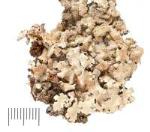
Hypotrachyna crenata (Kurok.) Hale
Hypotrachyna crenata
(Kurok.) Hale, Phytologia 28: 341
(1974).
Syn.:
Parmelia crenata
Kurok. ex Hale & Kurokawa, Contr.
U.S. Natl. Herb. 36: 168 (1964).
Description:
Thallus 3–6
cm wide, loosely adnate with subirregular to subimbricate,
1.5–5 mm wide lobes with subrotund to subtruncate apices;
isidia moderate to dense, cylindrical, simple or branched;
lower surface black in centre with pale brown papillate
marginal zone; rhizines sparse to moderately branched.
Cortex K+ yellow; atranorin (± trace of usnic acid). Medulla
K+ yellow, C–, KC–, P+ pale orange; stictic acid (major),
norstictic acid (minor), menegazziaic acid (minor) and related
compounds (traces). Characterized by the presence of stictic
acid, which is unusual in this genus, and the simple to
branched isidia.
Ecology and distribution
: Corticolous in
evergreen mossy forests at 1400–2300 m in Chiang Mai
Province, Doi Inthanon and Doi Suthep National Parks.
Reported from Asia and the eastern Pacific, India, Indonesia,
Taiwan, Thailand (WOLSELEY et al. 2002) and Japan
(HALE & KUROKAWA 1964).
89
Medulla K+ yellow turning red
90
90
Upper surface maculate. Lobes 1-5 mm wide
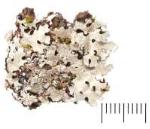
Hypotrachyna ramkhamhaengiana Elix & Pooprang
Hypotrachyna ramkhamhaengiana
Elix & Pooprang,
Mycotaxon 71: 113 (1991).
Description:
Thallus adnate, lobes subdichotomously to
irregularly branched, 1.5–5.0 mm wide; upper surface pale
grey to grey, becoming strongly white–maculate with sparse
to dense, cylindrical, simple or rarely branched isidia;
medulla white or yellow in part; rhizines moderately dense to
dense, simple or sparsely dichotomously branched. Cortex
K+ yellow; atranorin. Medulla K+ yellow turning dark red,
C–, P+ orange–red; salazinic acid (major), pigmentosin A
(minor) and traces of consalazinic acid and secalonic acid A.
Distinguished from
H. crenata
by the yellow medulla, simple
isidia and the salazinic acid complex in the medulla, with
traces of secalonic acid A.
Ecology and distribution:
Endemic to Thailand and at present only known from the
northern provinces; apart from the type locality, it also occurs
in Chiang Mai Province, in montane evergreen forests and in
oak/chestnut forests, at 1550–1600 m.
90
Upper surface not maculate. Lobes 5-10 mm wide
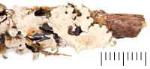
Hypotrachyna awasthii Hale & Patwardhan
Hypotrachyna awasthii
Hale & Patwardhan, Bryologist 77:
637 (1974).
Description:
Thallus loosely adnate 6–10 cm wide, with
broad (up to 10 mm wide), rounded lobes; isidia simple to
branched, cylindrical but with a ± slightly inflated base, up to
0.5 mm tall, black–tipped; lower surface dark brown to black,
rhizines moderately dense and sparsely dichotomously–
branched, narrow marginal zone erhizinate. Cortex K+
yellow; atranorin. Medulla K+ yellow turning red, C–, KC-,
P+ orange–red; norstictic acid (major), salazinic acid
(minor/trace).
H. ramkhamhaengiana
is distinguished by the
narrower lobes (1–5 vs. 5–10 mm) and lacks norstictic acid.
Parmelinopsis wallichiana
resembles
H. awasthii
but it lacks